Welcome to Gudur
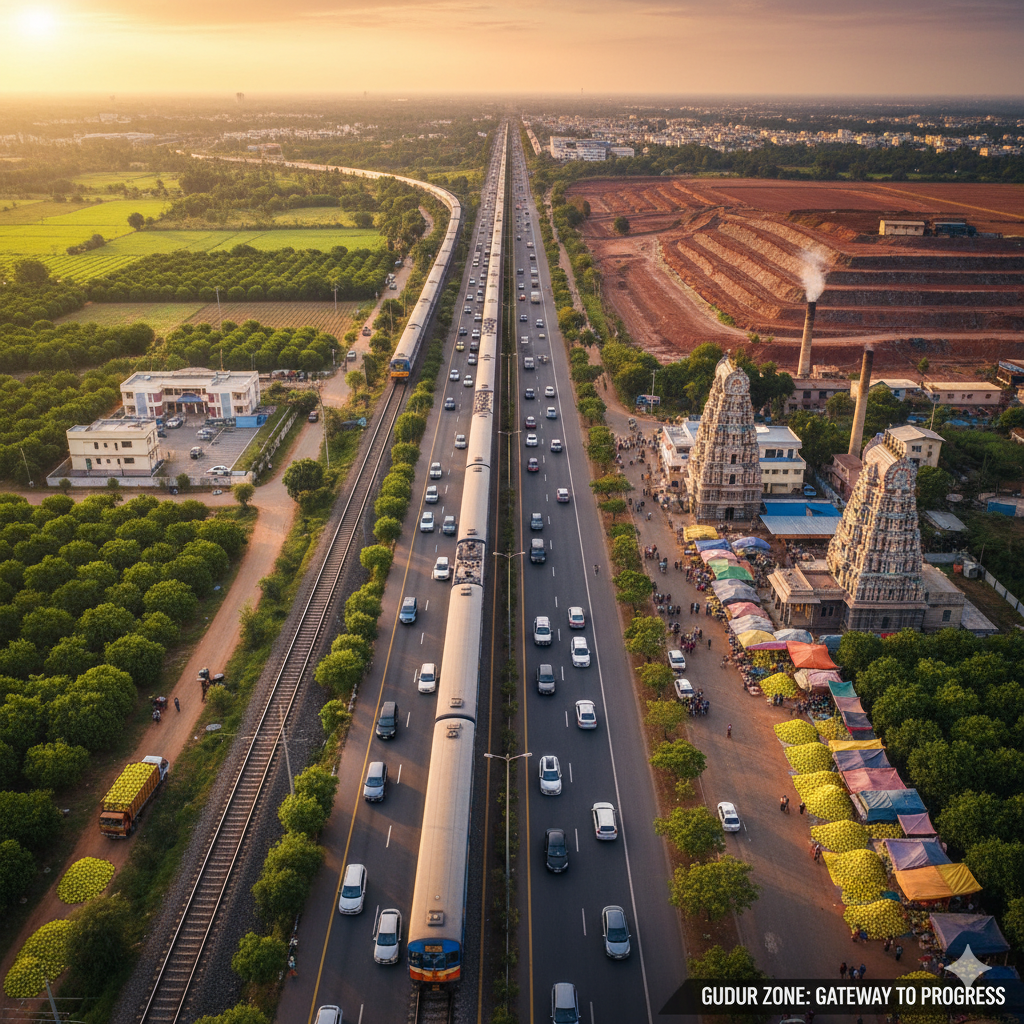
Gudur is one of the most significant zones in Nellore District, Andhra Pradesh, recognized for its strong agricultural base, bustling trade centers, and strategic transport connectivity. Located along the vital Chennai–Kolkata railway route and in close proximity to National Highway 16 (NH16), Gudur serves as a major commercial link between Nellore and Chennai.
Agriculture
Agriculture plays a vital role in shaping the economy of the Gudur Zone, supporting a significant portion of its rural population. The region is known for its red sandy soils and mineral-rich lands, which, along with favorable climate patterns, enable the cultivation of a wide range of crops. Lemon, paddy, millets, groundnut, and horticultural produce are the primary crops grown across various seasons. The zone especially stands out for its large-scale lemon cultivation, supplying markets across Andhra Pradesh and beyond. Irrigation here relies heavily on monsoon rains, supported by tanks, bore wells, and small canal networks that help maintain consistent water availability for farming activities.
Tourism
Tourism in Gudur Zone offers a refreshing blend of natural beauty, spiritual significance, and cultural heritage that attracts visitors from nearby regions throughout the year. The Sri Ranganayaka Swamy Temple at Nellorepalem stands as the zone’s prime spiritual landmark, drawing devotees with its serene surroundings and historic charm. Scenic village landscapes, freshwater tanks, and lush agricultural fields around Sydapuram, Chillakur, and Manubolu provide peaceful settings ideal for nature walks, photography, and family outings. Traditional festivals, temple fairs, and rural cultural events further enrich the tourism experience across the Gudur region.
Education
Education forms a key pillar of development in the Gudur Zone, providing learning opportunities for students across both rural and semi-urban areas. The region hosts a wide network of colleges and schools that support academic growth and skill development. Prominent institutions such as Audisankara College of Engineering & Technology, Sri Chaitanya Colleges, Narayana Junior College, and several degree and vocational colleges attract students from surrounding mandals. Government and private schools play an equally important role, offering quality education, digital classrooms, and improved learning facilities from primary to higher secondary levels.
Overview

Gudur Zone, located in the southern part of Nellore District, serves as a major economic, educational, and transportation hub that bridges rural communities with urban growth. Known for its flourishing lemon trade, mica mining, and expanding industrial base, Gudur has evolved from a modest trading town into a bustling regional center. Its strategic geographic position along the Chennai–Kolkata railway line and proximity to the Chennai–Nellore National Highway (NH16) has transformed it into a gateway for commerce and travel across Andhra Pradesh and neighboring regions.
The zone is characterized by its cultural harmony, with communities engaged in agriculture, trade, education, and services. From bustling markets to serene temples, Gudur reflects a vibrant blend of tradition and modernity. In recent years, rapid urbanization has led to improved infrastructure, better connectivity, and an influx of educational and healthcare institutions. Despite these developments, Gudur continues to preserve its agricultural roots and rural charm, offering a balance between progress and heritage. This makes the Gudur Zone a dynamic and essential part of Nellore District’s socio-economic landscape.
History
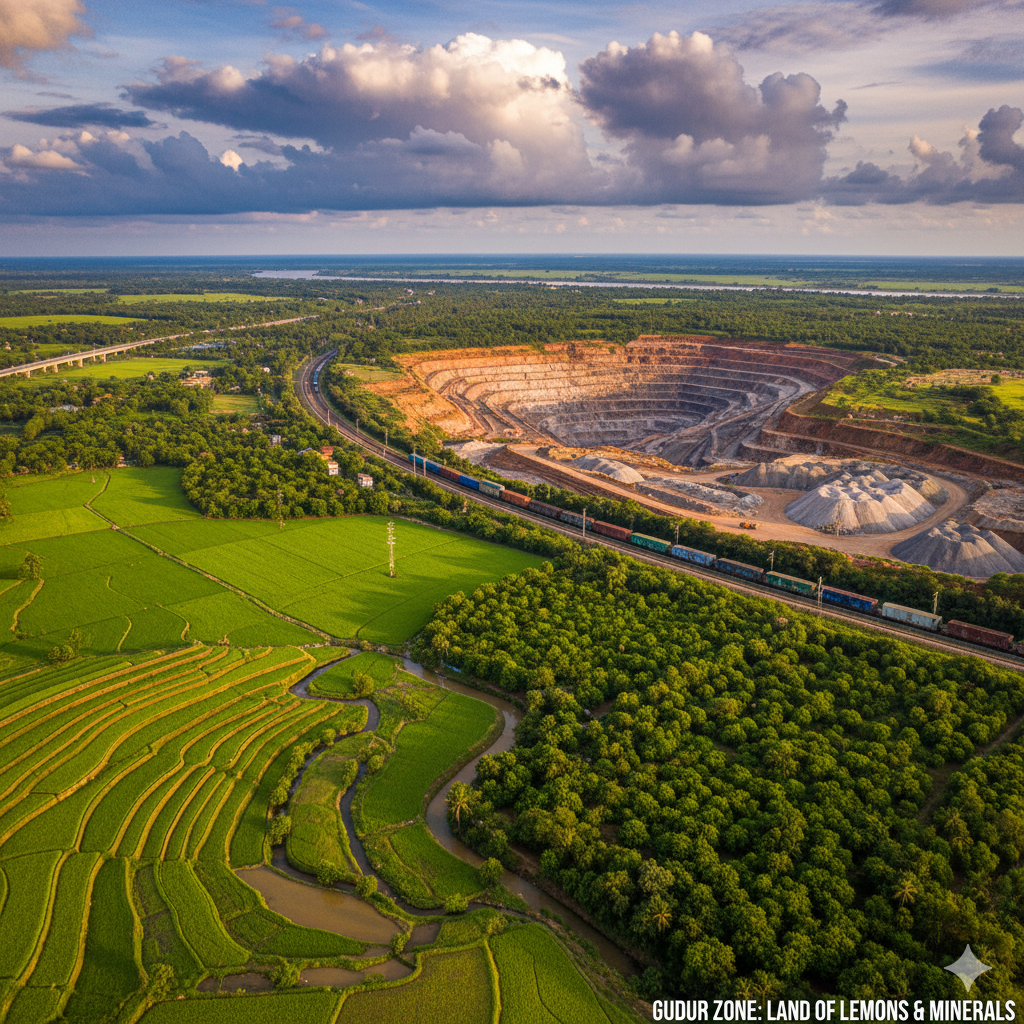
The history of Gudur goes back several centuries, with evidence of early settlements and trade routes linking it to ancient ports and inland kingdoms. Historically, the area was influenced by the Telugu Cholas, Pallavas, and the Vijayanagara Empire, who contributed to the development of trade routes, irrigation systems, and temple architecture. The region became particularly known for mica mining and lemon cultivation, both of which played a significant role in shaping its identity and economy in the 19th and 20th centuries.
During British rule, Gudur became a key station on the Southern Railway, linking coastal Andhra to Madras (now Chennai). The establishment of educational institutions, courts, and markets strengthened its role as a regional administrative and commercial center. The rich mica deposits brought mining activity and global trade interest, making Gudur a prominent player in the pre-independence mining sector. Today, much of this legacy remains visible in the levels of commerce and connectivity that continue to define Gudur’s growth trajectory.

Geography & Climate
Gudur Zone lies in the southern plains of Nellore, bordered by paddy fields, lemon orchards, and scattered rocky terrains. The area’s landscape is diverse, featuring red sandy soils ideal for horticulture and regions rich in minerals such as mica and quartz. A network of irrigation tanks, streams, and minor canals supports agriculture, while the Penna River system influences groundwater availability in nearby Mandals.
The climate in Gudur is tropical and semi-arid, with hot summers, humid monsoons, and mild winters. The southwest monsoon brings moderate rainfall, making agriculture viable for a variety of crops including paddy, millets, lemons, groundnuts, and cotton. Gudur is especially famous for its large-scale production and export of lemons, earning it recognition as one of the largest lemon markets in the state. With its unique blend of fertile soils, mineral-rich lands, and transport connectivity, Gudur remains a vital agricultural and industrial zone.
Administrative Setup
Gudur Zone forms a key part of Nellore District’s administrative network and is overseen by a Revenue Divisional Officer (RDO). The zone includes Mandals such as Gudur, Balayapalle, Manubolu, Chillakur, and Sydapuram, each managed by local government bodies headed by Tahsildars and Mandal Parishad Development Officers (MPDOs). Village-level administration includes Gram Panchayats and volunteers who assist in welfare scheme implementation, revenue services, and rural development.
Modern administrative measures have strengthened Gudur’s governance, including the use of digital platforms for public services, land record management, and welfare distribution. Public services like RTC bus depots, government hospitals, and e-Seva centers have made essential amenities accessible to both urban and rural communities. The region is also known for proactive engagement in education, women empowerment, and health initiatives. With strong leadership and public support, Gudur continues to be a model zone in the effective execution of district-level governance and development.